BY ED BALCEWICH
PHOTOGRAPHY: ED BALCEWICH; MARGIE FORBES;
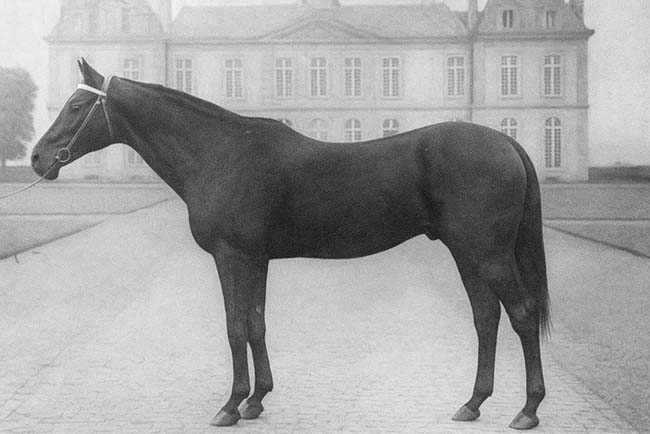
In the summer of 1956, at a local in-hand show in Caen, Normandy, a horse trader named Alfred Lefevre handed over 500 francs, the equivalent of roughly $80 at the time, for a four-year-old bay stallion that nobody else particularly wanted.
The breeders of Sainte-Marie-du-Mont were averse to novelties. They were not excited about this horse. He was unusual, modern in type, the product of bloodlines the local Normandy breeders regarded with suspicion. His name was Ibrahim.
The State Stud at Saint-Lô stationed him at Sartilly, where he covered mares for nearly two decades in relative obscurity. The stubborn Normandy breeders, unimpressed, considered him fit mainly for their cob mares, in local terms, a sign of outright disgrace for a stallion. By 1961 his lack of popularity had reached such a point that he could no longer attract sport horse mares at all. He remained relatively unknown during his lifetime.
Then came the summer of 1970 at Fontainebleau. In a single week, Ibrahim's offspring dominated the jumping finals so completely that even his most stubborn critics could no longer look away. His four-year-olds, Alcazar D, Aurore C, Azimut, Arteban, and a young horse named Almé, swept the jumping finals. When the World Equestrian Games returned to Normandy in 2014, the stallion line of Ibrahim provided 36 entries in the showjumping competition alone. Today the vast majority of the world’s top showjumpers carry his blood. The pedigrees of champions on five continents trace back to a stallion that the Normandy breeders could barely be persuaded to use. Ibrahim became famous after his death. Not while he was alive. He was not alone.
A gallery of the overlooked
Furioso xx (1939-1968, Thorough-bred): Twenty-one career starts. Zero wins. Described as well balanced but with slightly knock-kneed forelegs and tight hocks, he was bought cheaply for the French National Stud after World War II because nobody else wanted a failed racehorse. His son Furioso II transformed the Oldenburg breed into a powerhouse of modern jumping and dressage. His other son Mexico reshaped the Dutch Warmblood. Furioso himself became the leading sire of jumping horses in France from 1954 to 1961. Zero wins on the track. Incalculable influence on the modern sport horse...
CLICK HERE TO READ THE COMPLETE ARTICLE IN THE ONLINE EDITION OF BREEDING NEWS