BY GUILLAUME LEVESQUE
PHOTOGRAPHY: GUILLAUME LEVESQUE
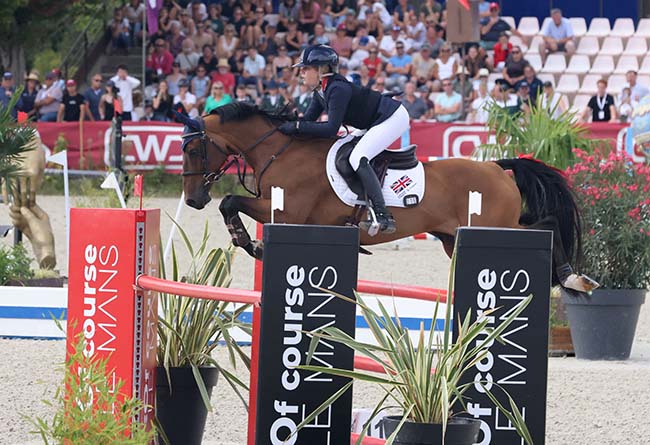
The latest European Pony Championships in Le Mans, France, held from July 29 to August 2, 2026 – the highest-level championship for ponies, for which there is no World Championship – once again provided compelling evidence: the gold and bronze medals went to ‘ponies’ of 100% sport horse breeding, while the silver medal was claimed by a pony crossed with a sport horse mare.
Under competition regulations, a pony is simply an equine that does not exceed the maximum height of 149.9 cms (14.2hh), shod, on the day of its FEI measurement. It can therefore belong to any pony or horse breed; or indeed to no breed at all, and may even have no recorded pedigree.
What is a pony?
Meeting this mandatory maximum height makes the task of breeding sport ponies considerably more challenging than breeding sport horses; without even mentioning rideability, which is even more important in ponies destined for children and teenagers. In every height category, the market naturally demands animals as close as possible to the upper limit. Hitting such a narrow target in terms of height, with all the variables associated with crossing, genetics, growth, and the many other criteria involved in breeding a top sport pony, is far from straightforward.
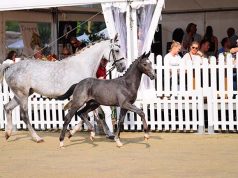
Whatever the case, competition rings are increasingly featuring ponies that look nothing like traditional ponies, but rather like genuine small horses; when they are not simply small horses.
Magic formulae
In dressage, the magic formula for breeding top-level ponies is no secret. It is difficult to compete with the best of German breeding, with only a handful of Dutch Welsh Riding Ponies occasionally able to challenge them. Descendants of the legendary Golden Dancer – and of his grandsons and influential sires FS Don’t Worry and FS Champion de Luxe – together with those of another great sire, Dornik B, continue to dominate the leading places at championships.
In eventing, as with horses, the formula is more diverse and different types of crosses can reach the highest level. Arabian and Thoroughbred blood is appreciated, but purebred ponies – notably Connemaras and New Forests – can also perform. They need to be good, rather than exceptional, across all three phases. Even the cross-country, although technical, remains relatively reasonable given the risks that cannot be taken with young teenagers.
In showjumping, however, reaching the very highest international level is a different matter altogether. The picture has become increasingly clear: to have the means to succeed among the very best in the individual final of the European Championships (jumped at 1m35)...
CLICK HERE TO READ THE COMPLETE ARTICLE IN THE ONLINE EDITION OF BREEDING NEWS