BY JACEK LOJEK / PZHK
PHOTOGRAPHY: KATARZYNA WISZOWATY
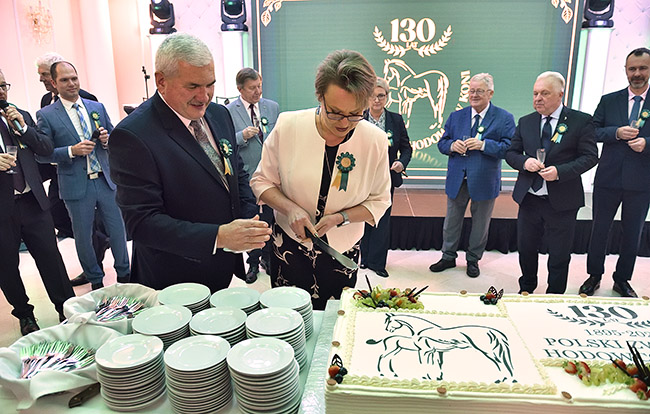
On Friday, November 28, 2025, a gala occasion was held in Sekocin, near Warsaw, to celebrate the 130th anniversaru of the establisment of horse breeding associations im Poland, continued by the Polish Horse Breeders’ Association
PZHK maintains studbooks for nine breeds: Malopolska, Wielkopolska, Polish Sport Horse, Silesian, Polish Coldblood Horse, Polish Ardennes, Hucul, Polish Konik and Pony.
PZHK originates from the Poznan Society for Registering Mares in Pedigree Books, established in 1895 at the initiative of the Central Economic Society in Poznan. The Association’s Poznan roots mean that the PZHK anniversary also coincides with the 130th anniversary of the Greater Poland Horse Breeders Association. The interwar period saw the development of breeding and the establishment of provincial horse breeders' associations in all Polish territories, now united into a single state entity. Their activities, suspended in 1939 due to the outbreak of World War II, were resumed in 1945.
The Polish Horse Breeders Association was established on May 11, 1957, by a general meeting of delegates from the provincial associations. From its inception, the PZHK’s mission was to support breeders in their daily work, provide advice and a wide range of services, and build relationships with industry partners and institutions to shape the future of horse breeding in Poland. Horse breeding was concentrated in national stud farms and stallion studs.
Following the Solidarity revolution at the turn of the 1980s and 1990s, the introduction of market economy principles and the liberalization of prices also led to changes in horse breeding in Poland. The opening of borders opened the door to the experience and knowledge of foreign breeders. Progress accelerated as Polish breeders gained access to foreign sires. The center of gravity began to shift from the state sector to private facilities, and the Warmblood population began to transform from a multi-purpose to a riding type. The rapid modernization and mechanization of agriculture reduced the demand for live draft power, and interest in using horses in various forms of equestrianism significantly increased...
CLICK HERE TO READ THE COMPLETE ARTICLE IN THE ONLINE EDITION OF BREEDING NEWS