
BY KATRIEN PALMERS, DVM, DECEIM, HEAD OF INTERNAL MEDICINE ECG
PHOTOGRAPHY: COURTESY EQUITOM
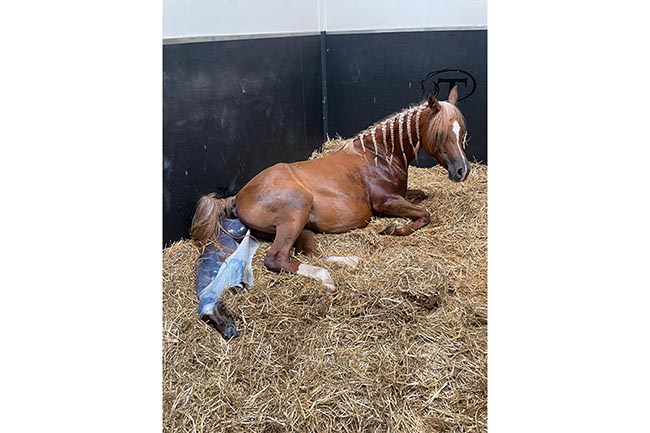
Foaling is one of the most anticipated moments in horse ownership. It’s exciting, emotional, and at times, unforgiving. Most mares deliver their foals quickly and without complications. But sometimes the birth does not go as expected, resulting in a problem birth or ‘dystocia’.
When a mare experiences problems during foaling, it is crucial to intervene quickly. Every minute counts to save both the foal’s and the mare’s life. Knowing what is normal, what is not, and when to act can make the difference
Why speed matters more in horses
Unlike many other species, horses are designed to give birth fast. In the wild, a prolonged delivery would leave the mare and foal vulnerable to predators. This biology still applies to domestic horses: once the active pushing phase starts, the foal should be born quickly.
If delivery slows down, oxygen supply to the foal can drop rapidly and cause a weak foal. For the mare, prolonged straining increase the risk of internal damage and future fertility problems.
What “normal” foaling looks like
A normal delivery follows a predictable pattern:
• Preparation phase-Stage 1: During pregnancy, the foal usually lies on its back. In stage 1 of labor, the foal rotates from its back onto its belly and extends its forelegs, neck, and head into the birth canal. The mare becomes restless and may lie down and get up repeatedly. This phase can take several hours.
• Delivery phase-Stage 2: Once the water breaks, progress should be rapid. Normally, you first see two front hooves, with the foal’s nose resting on top of the legs. normally lasts 10-20 minutes. Anything that disrupts this normal birthing process can lead to dystocia.
• Afterbirth phase: The placenta is expelled after the foal is delivered.
My mare is pregnant – now what?
Preparation is half the work. It starts with a good understanding of normal pregnancy and foaling. The typical gestation length ranges from 321 to 365 days. In the month before foaling, the udder develops, and two days to a week before birth, the teats fill with milk. Toward the end of pregnancy, droplets appear on the teats (“waxing up”). At this point, 24-hour monitoring is essentia: the birth is near.
By monitoring milk pH or electrolytes (sodium, potassium, calcium), an impending birth can often be predicted within two days in most mares...
CLICK HERE TO READ THE COMPLETE ARTICLE IN THE ONLINE EDITION OF BREEDING NEWS