BY ED BALCEWICH
PHOTOGRAPHY: ARND BRONKHORST; MARGIE FORBES
This is Part 3 of Ed Balcewich’s article entitled “The horses nobody wanted,” which now applies the road map within the framework of linebreeding, and illustrates with the “rebuilding the architecture of Palloubet d’Halong” who reportedly sold for $15 million in 2013.
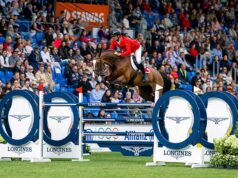
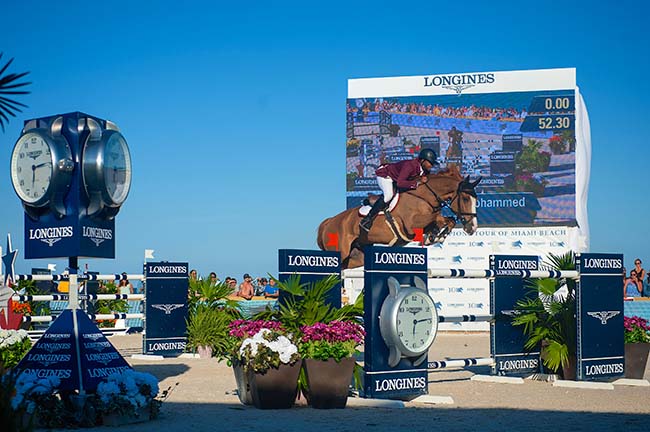
In 2013 a chestnut Selle Français gelding called Palloubet d’Halong sold for a reported $15 million (roughly €11–13.5 million) – the highest price ever paid for a showjumper. He was, by any measure, one of the most exceptional jumpers of his generation. With Janika Sprunger he placed seventh at the 2013 European Championships in Herning. He helped Qatar qualify for the Rio 2016 Olympics – their first-ever equestrian jumping team. He traveled to the Games as the squad's official reserve horse; Bassem Hassan Mohammed ultimately competed on Dejavu. He won and placed at CSIO5* 1m60 Grand Prix classes, including Furusiyya Nations Cup victories for Qatar. He moved with an elasticity and electricity that silenced arenas. His jump was expressive, honest, and effortless.
His pedigree was as remarkable as his ability. His sire line ran through Baloubet du Rouet and Galoubet A to Almé Z and Ibrahim; the backbone of the modern French jumper.
His dam line told the same story from a different angle. It ran through Muguet du Manoir, his maternal grandfather, back through Everest Love and Indra Love; the old French Thoroughbred influence that gave the Selle Français its signature elasticity, stamina, and durability. Muguet du Manoir himself descended from Plein d'Espoirs, a direct son of Orange Peel; anchoring the dam line to the same foundational root as the sire line. Beneath him sat the three stallions who built the breed: Orange Peel xx [1919], Karikal [1910], and Vas-y-Donc [1921], woven together in the same architecture that produced Ibrahim himself.
It was one of those pedigrees so structurally right that it seemed almost inevitable he would be special. And then his genetic story stopped. He was a gelding. He produced no sons. No daughters. Nothing to carry forward the architecture that made him extraordinary. Breeders watched a once-in-a-generation pedigree disappear into history.
Which leads to a question that has occupied breeders ever since: if Palloubet's architecture could not be passed on, could it be rebuilt?
The point is not to recreate Palloubet
Let us be honest about what is and what is not possible. No two pedigrees are identical. Palloubet d’Halong was a specific horse with a specific arrangement of ancestors. He cannot be reproduced. He cannot be copied. Anyone who tells you otherwise is selling something.
But the architecture that produced him, the principles, the conduits, the foundational concentrations, those can be understood. And once they are understood, they can be applied.
That is what Framework Linebreeding actually means for the small breeder. Not chasing copies. Not trying to recreate horses that cannot be recreated. Understanding the foundational architecture deeply enough that you can rebuild it with whatever ingredients are available to you.
This is the story of how we applied that thinking to one of the most ambitious pedigrees in modern sport horse history – and what came out the other side...
CLICK HERE TO READ THE COMPLETE ARTICLE IN THE ONLINE EDITION OF BREEDING NEWS