
BY PERLA FLEURI / INVITRO EQUINOS
PHOTOGRAPHY: INVITRO EQUINOS / COURTESY EQUITOM
Every breeder dreams of producing that one exceptional horse – the athlete that excels at the highest level and later becomes the cornerstone of a successful breeding programme. Yet the mares with the greatest genetic value are often the most difficult to breed from.
Some mares are still competing at the peak of their careers. Others only enter the breeding shed after years in sport, and when age has begun to affect fertility. Some are unable to carry a pregnancy despite producing healthy eggs; while irreplaceable stallions may have only a handful of frozen semen doses remaining.
Not long ago, these challenges often meant difficult compromises. Breeders had to choose between sport and reproduction, accept declining fertility, or risk losing valuable bloodlines altogether.
Today, advances in assisted reproductive technology are changing that picture. Techniques such as Ovum Pick-Up (OPU) and Intracytoplasmic Sperm Injection (ICSI) have become powerful tools for preserving elite genetics and expanding breeding opportunities that were once considered impossible.
Importantly, these technologies are not intended to replace conventional breeding. Artificial insemination and embryo transfer remain the foundation of modern equine reproduction. Instead, OPU and ICSI provide solutions for situations where traditional approaches are limited by age, fertility or logistics. Used responsibly and by experienced specialists, they allow breeders to protect valuable genetics while maintaining the highest standards of animal welfare.
From ovary to embryo
Although the technology behind OPU and ICSI is sophisticated, the principle is surprisingly straightforward.
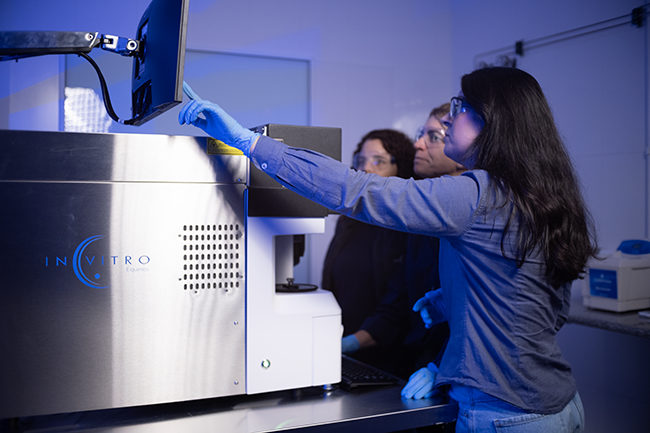
During an OPU procedure, a veterinarian collects immature oocytes directly from the mare's ovaries using ultrasound guidance. Unlike conventional breeding, the mare does not need to ovulate naturally. The retrieved oocytes are transported to a specialised laboratory, where they undergo in vitro maturation under carefully controlled conditions.
Once mature, each oocyte is fertilised using ICSI, a technique in which a single sperm cell is injected directly into the egg. The resulting embryos are cultured in the laboratory until they reach the blastocyst stage before being cryopreserved. They can then be transferred to recipient mares immediately or stored for months – or even years – before use.
This separation of embryo production from pregnancy gives breeders an unprecedented degree of flexibility. Rather than relying on a single breeding season or synchronising donor and recipient mares, embryos can be created when conditions are optimal and transferred whenever the breeder chooses.
Sport mares, rare semen, and the rise of embryo banking
For many breeders, one of the greatest advantages of OPU and ICSI is that it removes the need to choose between a mare’s sporting career and her reproductive future.
Elite mares often reach their highest value on the competition circuit during the very years when they are also at their reproductive peak. Traditionally, breeding meant interrupting training, withdrawing from competition, or postponing reproduction until retirement – a decision that could come at a significant sporting or financial cost
OPU offers a practical alternative. Because oocytes are collected directly from the ovaries, the procedure can usually be scheduled around the mare's training and competition calendar. Most mares return quickly to their normal routine, allowing embryo production to take place while they continue competing at the highest level. For owners of international sport horses, this flexibility has fundamentally changed the way breeding programmes can be planned. The same technology has also transformed the use of valuable stallion semen.
In conventional artificial insem-ination, each insemination requires a relatively large number of sperm cells. This becomes a major limitation when working with frozen semen from deceased stallions, rare bloodlines, or sires for which only a small number of doses remain...
CLICK HERE TO READ THE COMPLETE ARTICLE IN THE ONLINE EDITION OF BREEDING NEWS