By Milou van Engeland / KWPN
Photography: Dirk Caremans
Sport and breeding are increasingly going hand in hand. In this context, the performance predicate, or prestatie predicate in Dutch, has become highly valuable for a broodmare as it indicates her ability to pass on athletic qualities to her offspring.
To date, only a select group of just over 8,000 mares has ever been awarded this predicate, making it a true hallmark of quality within breeding.
Unique system
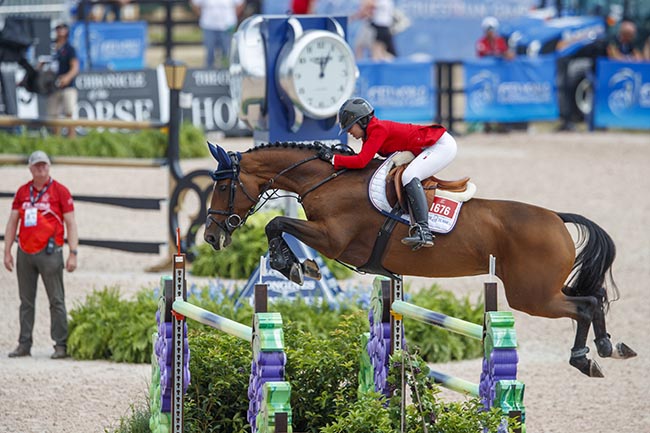
The KWPN has a unique predicate system. No other studbook in the world distinguishes mares’ qualities in this way, providing breeders with a wealth of information. Most predicates are awarded based on a mare’s own qualities or her individual sport results. However, the prestatie predicate and preferent status are exceptions. To receive the prestatie predicate, a mare must earn five points based on the achievements of two or three of her offspring (see box). She earns three points for an offspring competing in Grand Prix dressage, at a minimum 1m50 level in showjumping or achieving a four- or five-star placement in eventing. Offspring with lower-level results earn the mare one or two points, provided they compete at least at Z1 dressage, 1m30 jumping, or M-level eventing.
Other disciplines such as driving and endurance are also considered, as well as notable results at the World Championships for five-year-old dressage horses. Additionally, a horse can earn points through KWPN aptitude tests such as the IBOP, EPTM, and the performance tests. Since offspring often only reach the top levels when the mare is older, or even after she has passed away, the prestatie predicate can also be awarded posthumously.
Breeding directions
Most mares only receive the prestatie predicate later in life. Consequently, 83% of prestatie mares are registered in the riding horse breeding direction. In 2006, the specialization system was introduced, dividing this breeding direction into dressage and jumping horses. For horses born from 2006 onwards, one of the two breeding directions was chosen. This also applies to mares born earlier but only presented at the inspection from 2006 onwards, at which time a breeding direction was assigned. This concerns 17% of the prestatie mares. Of these, 1,012 are jumping horses, while 405 prestatie mares are registered in the dressage breeding direction. This can partly be explained by the fact that around the turn of the century more jumping foals were bred than dressage foals. Furthermore, international results in showjumping are easier to compare with Dutch standards than those in dressage. There are more FEI competitions in jumping, and results processing is more precise than for many national competitions abroad. Additionally, jumping horses tend to compete more frequently and at a younger age. On average, dressage mares receive their prestatie predicate later than jumping mares. When comparing prestatie mares born around the turn of the century, however, the differences between the two breeding directions...
CLICK HERE TO READ THE COMPLETE ARTICLE IN THE ONLINE EDITION OF BREEDING NEWS