
By Adriana van Tilburg
OPU/ICSI is without a doubt one of the most discussed reproductive techniques in modern horse breeding. Where some see opportunities to preserve mare lines or make targeted stallion selections, others raise questions about ethics, genetic diversity, and commercial interests.
This article takes a closer look at techniques like OPU/ICSI and gender selection of foals. We give the floor to breeders who are in favor, who are unsure, or who express concern about OPU/ICSI— because only with knowledge can we have an honest debate.
OPU/ICSI: What exactly is it?
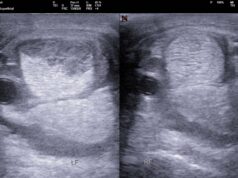
OPU/ICSI may sound like a technical acronym from a medical manual, but it has become a familiar term in modern horse breeding. This method opens doors that often remain closed with traditional techniques. Follicular aspiration, commonly known as Ovum Pick-Up (OPU) or Transvaginal Aspiration (TVA), is a minimally invasive technique in which oocytes are retrieved directly from a mare’s ovaries under precise ultrasound guidance. These oocytes are then matured in the laboratory.
Next comes ICSI – Intracytoplasmic Sperm Injection – a procedure in which a single sperm cell is injected directly into an oocyte. The fertilized oocytes are cultured in the lab for several days and then frozen or transferred directly into a recipient mare. The Italian company Avantea was one of the pioneers in this field. As early as 2004, they began offering the technique, building on their expertise in bovine reproduction. By investing heavily in research and optimizing laboratory conditions specifically for horses, they elevated the method to a higher level.
However, it took some time before OPU/ICSI truly broke through commercially. Only around 2014/2015 did success rates become reliable and sufficiently stable for the technique to be considered a serious alternative to traditional embryo transfer. Today, OPU/ICSI offers many possibilities – especially for sport mares in training, older mares with fertility issues, or when using rare or low-quality semen.
Is OPU-ICSI an expensive technique?
Not when you consider that each OPU-ICSI procedure results in an average of two embryos and a pregnancy rate above 70% – compared to only 0.6 embryos per procedure with traditional flushing, so cost-effectiveness is high.
The ability to optimize semen use, freeze embryos, and schedule transfers at the desired time further enhances economic efficiency.
At Avantea, all steps – from oocyte retrieval to embryo transfer – are managed in-house with integrated protocols. This allows for optimal control over timing and cost and produces better results than other methods. (While Avantea does not publish costs on their website, the Genetech Advanced Center for Equine Reproduction does include a full range of fees for the USA, Europe, and Brazil [4])...
CLICK HERE TO READ THE COMPLETE ARTICLE IN THE ONLINE EDITION OF BREEDING NEWS