BY DIMITRI KADIC / MVM DES DACVS-LA DECVS; EQUINE SURGEON AT EQUITOM
PHOTOGRAPHY: COURTESY EQUITOM
There is something comforting about a horse quietly chewing hay, ears relaxed, seemingly at ease. For many owners, that image is the very definition of wellbeing. And yet, behind that calm appearance, a horse can sometimes be living with significant, chronic pain – pain that remains completely hidden to the untrained eye
One of the most striking examples of this is a condition called EOTRH, or Equine Odontoclastic Tooth Resorption and Hypercementosis. It is a disease that affects the incisors – the front teeth – and, in some cases, the canine teeth. While it is most commonly seen in older horses, it is increasingly being diagnosed across a wider range of ages, largely thanks to better awareness and more advanced dental imaging.
What makes EOTRH particularly challenging is not only its progressive nature, but also the remarkable ability of horses to mask discomfort. Unlike humans, they rarely show obvious signs of dental pain. They continue to eat, to work, to behave “normally”, all while coping with a condition that can be deeply uncomfortable. As a result, the disease often remains unnoticed until it has already advanced.
Understanding the progression, symptoms, diagnosis, and treatment of EOTRH can help horse owners recognize the problem early and ensure their horse receives the care it needs.
Disease progression and pathological processes
As the name suggests (“resorption and hypercementosis”), EOTRH involves two distinct but often simultaneous pathological processes affecting the teeth and their surrounding structures.
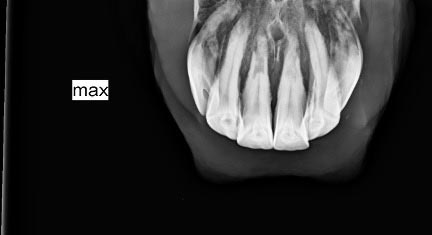
Tooth resorption: The first process is tooth resorption, a destructive process in which the tooth structure is gradually broken down and dissolved (image 1).
This process is driven by specialized cells known as odontoclasts, which normally play a role in natural tooth remodeling. In horses affected by EOTRH, these cells become overactive and begin to attack the tooth’s internal structure.
As a result:
• The tooth becomes structurally weakened;
• Internal cavities may form within the tooth;
• The tooth becomes fragile and prone to fractures;
• In advanced cases, parts of the tooth may break off or fall out.
This internal destruction can also expose sensitive structures within the tooth, causing significant pain and inflammation.
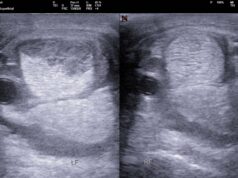
Hypercementosis: The second process is hypercementosis, which involves the excessive production of cementum, the mineralized tissue that normally covers the tooth root (image 2).
This overproduction is caused by cells called cementoblasts, which begin to deposit abnormally thick layers of cementum around the roots of the affected teeth.
Over time, this leads to:
• Bulbous, club-shaped root enlargements;
• Irregular root surfaces;
• Distortion of the normal tooth structure.
These changes are highly characteristic of EOTRH and are often clearly visible on dental radiographs.
The combination of tooth destruction and abnormal root growth creates chronic inflammation and pain within the tissues surrounding the teeth.
Clinical signs horse owners may notice
For horse owners, the difficulty lies in recognising the signs, because they are often subtle. In more advanced stages, the changes can become obvious (images 3 and 4):
• Inflamed, red, or receding gums;
• Thickened incisor roots, sometimes visible or palpable above the gum line;
• Small draining tracts or abscesses (fistulas) near the roots of the incisors;
• Loose incisors that even may fall out spontaneously;
• Teeth that appear cracked, brittle, or broken;
• An increase in tartar buildup;
• Difficulty biting into hard food such as carrots or apples;
• Dropping pieces of food after attempting to bite;
• Bad breath caused by infection and tissue breakdown.
But in the beginning, the signs are much less apparent. A horse may hold its tongue slightly between the incisors, show tension around the lips, or become more sensitive when the mouth is touched. Some horses eat more slowly, or show a mild reluctance to accept the bit. These small changes are easy to overlook – yet they can be the only visible expression of significant discomfort.
Whenever a horse shows one or more of these symptoms, it is advisable to contact a veterinarian for a dental evaluation. Routine dental examinations are particularly important for horses over 15 years of age, as the risk of EOTRH increases with age.
CLICK HERE TO READ THE COMPLETE ARTICLE IN THE ONLINE EDITION OF BREEDING NEWS